
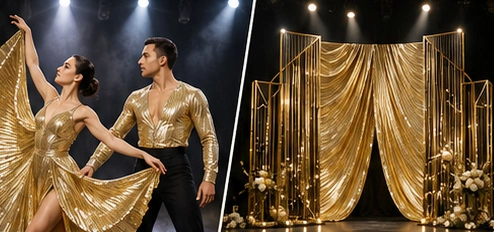
Oltin rangli qatlamli oqlangan mato yorqin porlayapti
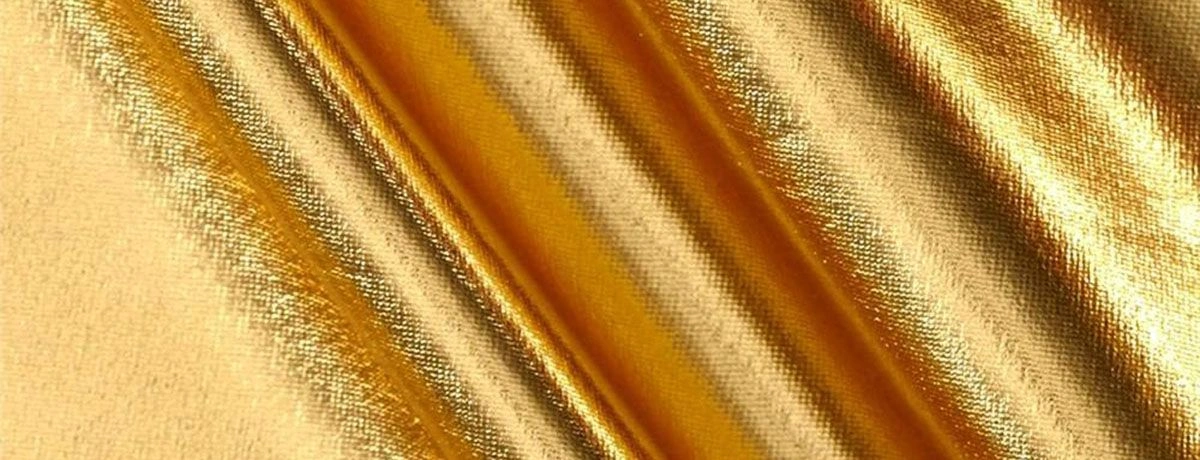
Gold pleated lame is a lightweight metallic fabric, usually woven from polyester with metallic (lurex-type) yarns, then set with permanent accordion pleats. The metallic yarn gives it a mirror-like gold face; the accordion pleating adds narrow, spring-like folds that catch light and add movement.
Because "lame" describes a fabric made with metallic yarns rather than a single fixed spec, two rolls both sold as "gold pleated lame" can differ in base fiber, weight, and pleat depth, which is exactly what a wholesale buyer needs to pin down before ordering.
Key Takeaways
- Lamé is a fabric woven with metallic yarns, not a fiber; most commercial gold lamé uses a polyester base.
- The look comes from two variables: metallic-yarn content (sheen) and accordion pleat depth (texture and light play).
- Accordion pleats in polyester lamé are usually heat-set and permanent, but hold depends on base fiber, so confirm it.
- It is thin and lightweight, so it suits eveningwear, décor accents, bag panels, and trims rather than structural pieces.
- For B2B orders, specify base fiber, weight (GSM), pleat type/depth, width, color, and MOQ, not just “gold lamé”.
What Is Gold Pleated Lamé Fabric?
Gold pleated lame fabric is a lightweight metallic woven fabric—most often polyester blended or woven with metallic yarns—finished with permanent accordion or crush pleats that give it a reflective gold sheen, textured shimmer, and fluid drape. “Lame” refers to fabric woven or knitted with metallic yarns, so the gold effect comes from the yarn itself rather than a surface coating, while the pleats break up a flat shine into a more dynamic, light-catching finish.
For B2B buyers, garment manufacturers, apparel and accessory designers, home décor and event stylists, and costume or stage production teams, the key variables are composition, pleat type, metallic-yarn ratio, durability, and sourcing quality. This guide looks at those specifications, how gold pleated lame differs from similar metallic fabrics, where it performs best across apparel, accessories, décor, and performance use, and what to check in suppliers before ordering. Change the base fiber or metallic content and you change price, drape, and wear life, which is why this fabric remains a go-to option when a project needs lightweight structure, durable metallic impact, and strong visual movement.
What Is Gold Pleated Lame Made Of?
Most commercial gold lame is built on a polyester ground woven with metallic yarns, often the same metall iplar used in trims and embroidery. Polyester carries the pleat well, resists everyday wear, and keeps cost far below true metal-thread lame. The metallic-yarn content drives the sheen: a higher ratio reads as bright, mirror-gold, while a lower ratio gives a softer, antique glint. This is the first thing to confirm on a spec sheet, because "gold lame" can mean anything from a subtle shimmer to a full metallic mirror finish.
Pleated vs Flat Lame and Similar Metallics: What's the Difference?
Buyers often lump "shiny gold fabrics" together, but the construction differences change price, hand-feel, and end use. Here is how gold pleated lame compares with the fabrics it's most often confused with:
| mato | qurilish | Look & hand | Odatda B2B foydalanish |
|---|---|---|---|
| Gold pleated lamé | Metallic-yarn weave, accordion heat-set pleats | Textured mirror shine, fluid, lightweight | Eveningwear, décor accents, bag panels |
| Flat (plain) lamé | Metallic-yarn weave, no pleats | Smooth continuous shine | Linings, costume, banners, trims |
| Metallic foil fabric | Foil laminated onto a knit/woven base | Shine sits on surface, can crack/peel | Fast-fashion apparel, low-cost decor |
| Brocade / jacquard | Woven pattern, may include metallic yarn | Raised motif, heavier, structured | Formalwear, upholstery, ceremonial |
The practical takeaway: lame's shine is to'qilgan, so it won't peel the way foil can, and the accordion pleat is what separates the pleated version from ordinary flat lame.
Types of Pleats and Metallic Finishes to Specify
For manufacturers, the differences that matter come down to pleat geometry and finish, not marketing names. Here are the variables most likely to appear on a purchase order:
| o'zgaruvchan | Options | Effect on the finished product |
|---|---|---|
| Pleat type | Accordion, crush/crinkle, sunray | Accordion gives uniform folds; crush gives random texture; sunray fans out from a point |
| Pleat depth | Fine (2-3 mm) to wide (10 mm+) | Finer pleats read as texture; wider pleats read as movement and volume |
| Metallic-yarn ratio | Pastdan yuqoriga | Controls brightness, from antique glint to mirror gold |
| Asosiy tola | Polyester (common), nylon, blends | Sets pleat retention, cost, and heat tolerance |
| rang | Gold, silver, and other metallics | Gold for warm/formal, silver for eveningwear and costume |
Sanoat bo'ylab ilovalar
Because gold pleated lame is thin, light, and eye-catching, it works best as a statement layer or accent rather than a structural fabric, while more structured pieces may lean on durable 100% poliester Mini Mat mato or similar bases. A single base quality can serve several buyer types at once, which helps consolidate orders.
Apparel and Eveningwear
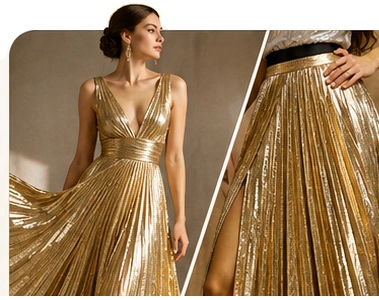
In apparel, gold pleated lame is a go-to for eveningwear, stage and costume, and party lines, where the metallic sheen and pleated movement do the heavy lifting on a garment. It suits gowns, skirts, tops, and sleeve or panel accents, and it drapes far better than stiff foil alternatives. For garment manufacturers, the lightweight hand keeps finished pieces comfortable, though the metallic yarn calls for a fine needle and careful pressing on the line.
Home Decor and Event
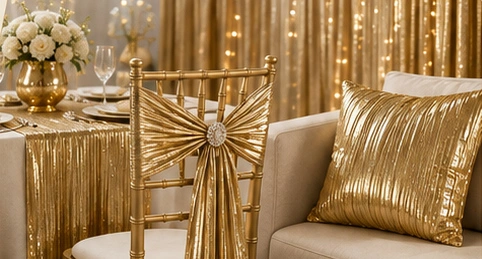
Décor and event buyers use pleated lame for cushions, table runners, backdrops, chair sashes, and drapery accents where a reflective focal point is wanted. The pleats add dimension under lighting, which is why it shows up in display and event styling more than in heavy, everyday upholstery. Its light weight makes it easy to gather and hang, but it is best positioned as an accent rather than a high-abrasion surface.
Sumkalar va aksessuarlar
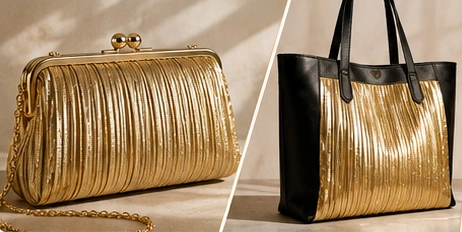
Bag makers use gold lame panels for clutches, evening bags, and fashion totes, typically backed or interlined for structure, then stitched with 40/2 100% yigirilgan poliester tikuv ipi for strength and seam durability. Because raw lame is thin, it's often paired with a firmer base such as a tafta or mid-weight lining to add body, and coordinated sumka va bagaj aksessuarlari for wholesale orders help turn those panels into finished products. The result is a fashion-forward metallic panel with the durability the base fabric provides, a common approach for seasonal and occasion accessory lines.
Costume, Stage, and Display
Costume, dance, and display buyers value lame for its stage presence: it reads as bright and metallic under lights and is available in silver as well as gold, and it often pairs well with decorative dantel matolar in various constructions for added texture. Its low weight keeps performance costumes wearable, and the pleats create motion on stage. For repeat display use, confirm pleat retention and light-fastness so the metallic face holds up under sustained lighting.
Key Properties for Sourcing Buyers
Gold pleated lamé earns its place on four practical properties buyers can plan around: a strong metallic sheen from the woven-in yarn, a light and fluid hand, textured movement from the pleats, and easy handling in cut-and-sew. The trade-off to manage is delicacy: metallic yarns can snag, and high heat can flatten pleats or mark the surface, so care specs matter, as does choosing the best sanoat tikuv ipi for each project to avoid skipped stitches or seam damage.
-
Woven-in metallic sheen — the gold comes from the yarn, so it won't peel like foil.
-
Yengil, suyuq parda — well suited to accent layers, panels, and gathers.
-
Textured light play — accordion pleats turn flat shine into shifting shimmer.
-
Snag and heat sensitivity — needs a fine needle, low-heat pressing, and a care spec passed to the end customer.
Sourcing Gold Pleated Lamé from MH (Supplier Overview)
Sourcing a metallic like gold pleated lamé is less about finding "a gold fabric" and more about finding a partner who can hold the same sheen and pleat depth across reorders, and that consistency is where MH (Ningbo MH), a garment-materials and fabric supplier working with buyers in over 150 countries since 1999 with localized operations in key markets such as Nigeria, fits a wholesale program. In practice that lets a bag maker or eveningwear brand buy the lamé, the coordinating lining or taffeta backing, the matching metall iplar, va ulgurji tikuv iplari for industrial production from one source rather than reconciling colors and lots across several.
Custom specs, base fiber, metallic-yarn ratio, pleat type, weight, width, and color, are quoted to your production needs, backed by Ningbo MH’s global garment-accessory supply capabilities. Browse related metallic and specialty fabrics, explore wholesale shifon mato supply from MH, or contact MH for a spec-based quote on gold or silver pleated lamé.


Savol-javoblar
What is lamé fabric made of?
Lamé is any fabric woven or knitted with metallic yarns. Most commercial gold lamé uses a polyester base combined with metallic (lurex-type) yarn, which keeps it affordable and durable while giving the metallic gold sheen. True metal-thread lamé exists but is rare and costly, so polyester-based lamé is the standard for wholesale and manufacturing orders.
Is gold lamé the same as gold foil fabric?
No. In lamé the shine is woven in from metallic yarns, so it won't peel or crack. Foil fabric has a metallic layer laminated onto a base, which sits on the surface and can crack or flake with wear and washing. For products that need to survive handling and cleaning, woven lamé is usually the more durable choice, and it also helps to check supplier reviews before committing to a wholesale order.
Do accordion pleats in lamé wash out?
On a polyester base, accordion pleats are typically heat-set and permanent under normal use. They can relax or flatten if exposed to high heat, hot ironing, or a hot dryer. Pleat retention depends on the base fiber, so confirm it with the supplier and pass a low-heat, air-dry care spec to the end customer.
How heavy is gold pleated lamé fabric?
Gold pleated lamé is thin and lightweight, which is why it's used for accent layers, panels, drapes, and trims rather than structural pieces. It is also a great choice for lightweight accent projects. Exact weight varies by base fabric and metallic-yarn content, so ask the supplier for the GSM and, where relevant, the base fiber denier before ordering; if needed, order a sample to check the hand, thickness, or finish first.
What should I specify when ordering pleated lamé wholesale?
Specify base fiber (usually polyester), metallic-yarn ratio or sheen level, pleat type and depth (accordion, crush, sunray), weight or GSM, width, color (gold or silver), MOQ, and lead time. Product photos may differ slightly from the color shown on screen, so checking a sample helps, and it is also smart to confirm stock before placing the order. Providing these upfront lets a supplier like MH quote accurately and hold consistent metallic lots across reorders.
